
Use Cases
Computer Vision use cases for industrial and logistics teams
From defect detection to safety monitoring, we help teams identify where visual automation can reduce manual effort, improve consistency, and create operational visibility.
Visual Automation Scenarios
Detection systems adapted to your site, workflow, and camera conditions
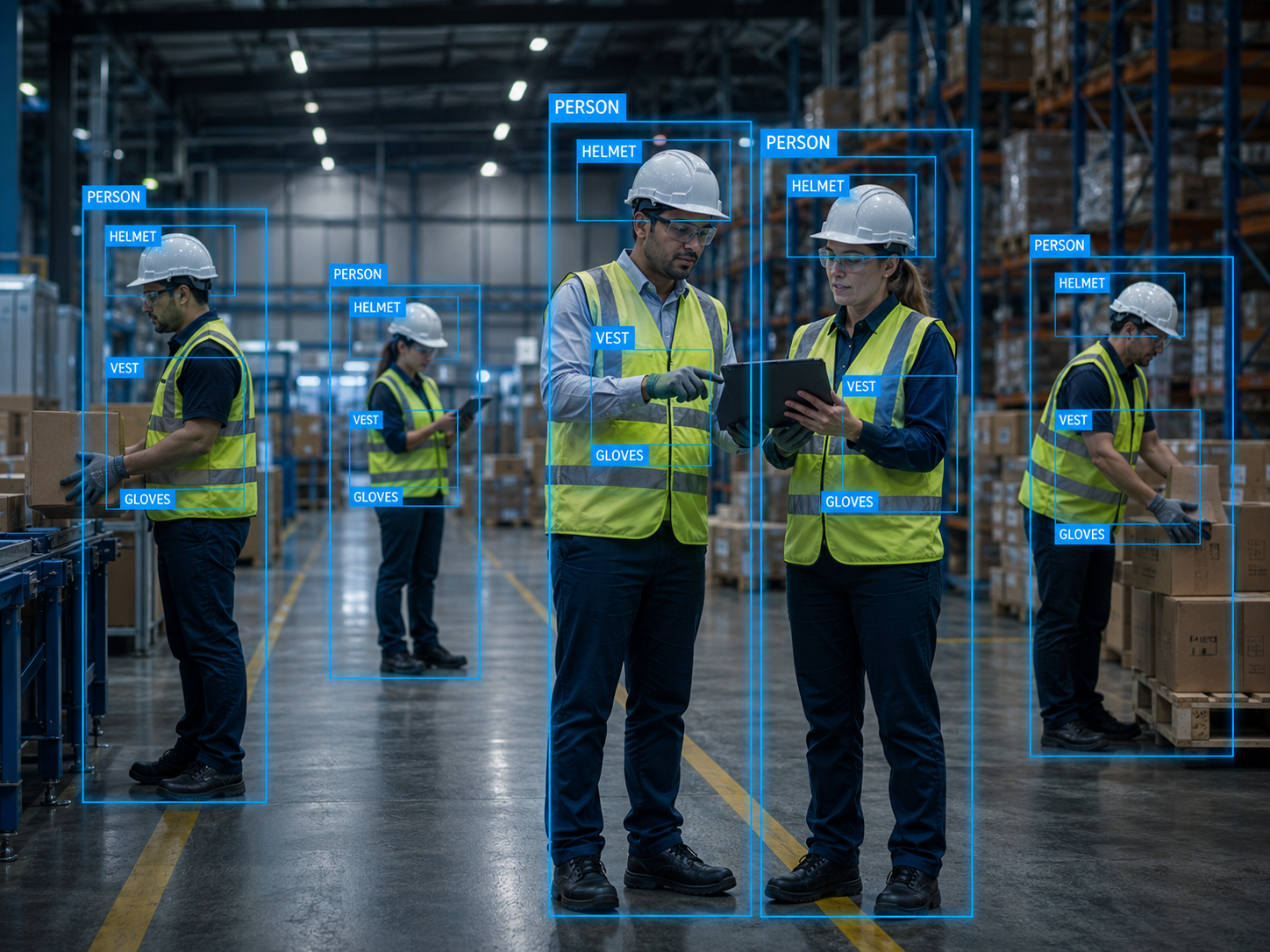
PPE & Worker Safety
Detect helmets, vests, gloves, and people in operational areas.
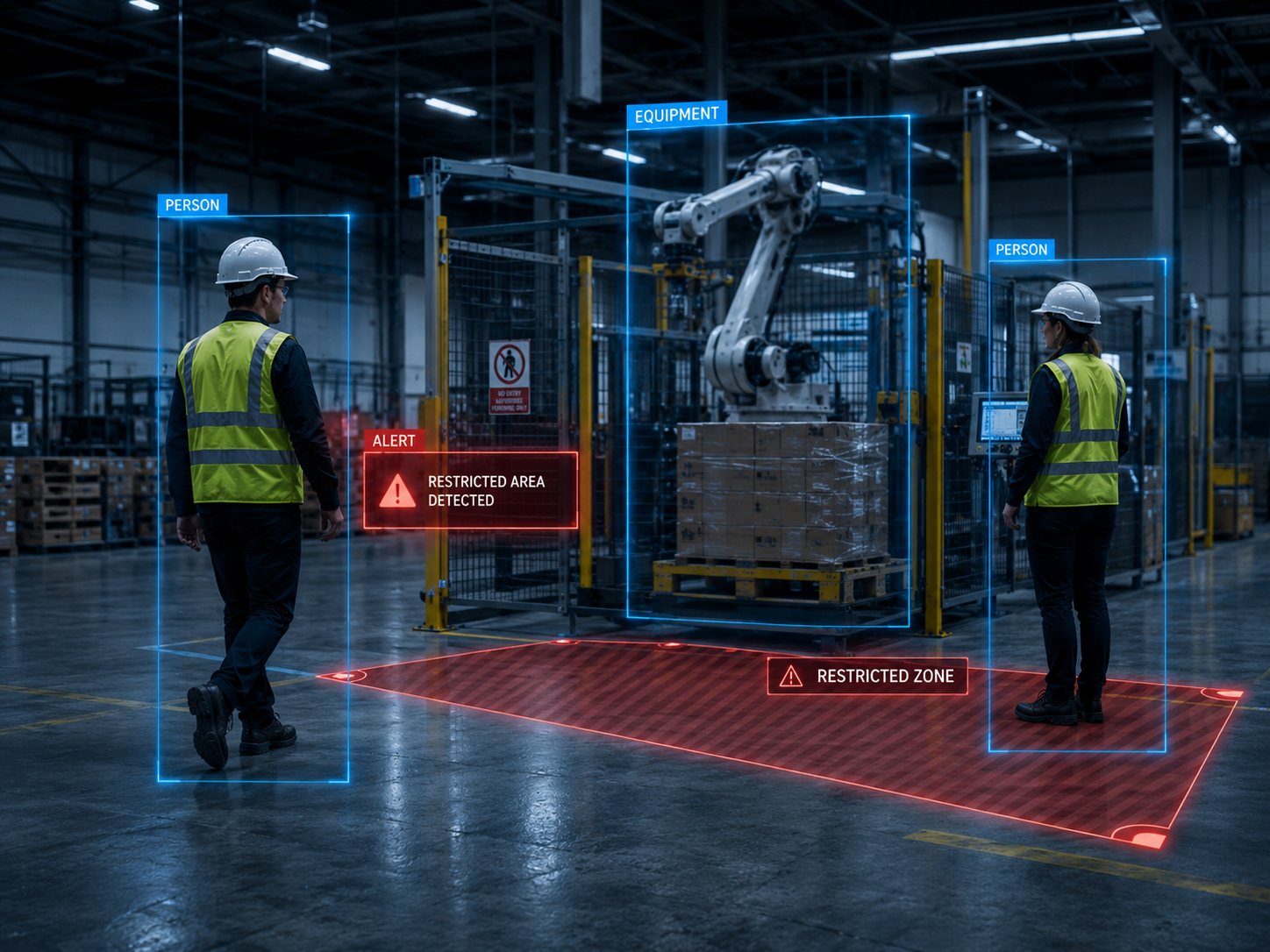
Restricted Area Detection
Identify people entering safety-critical zones or machinery areas.
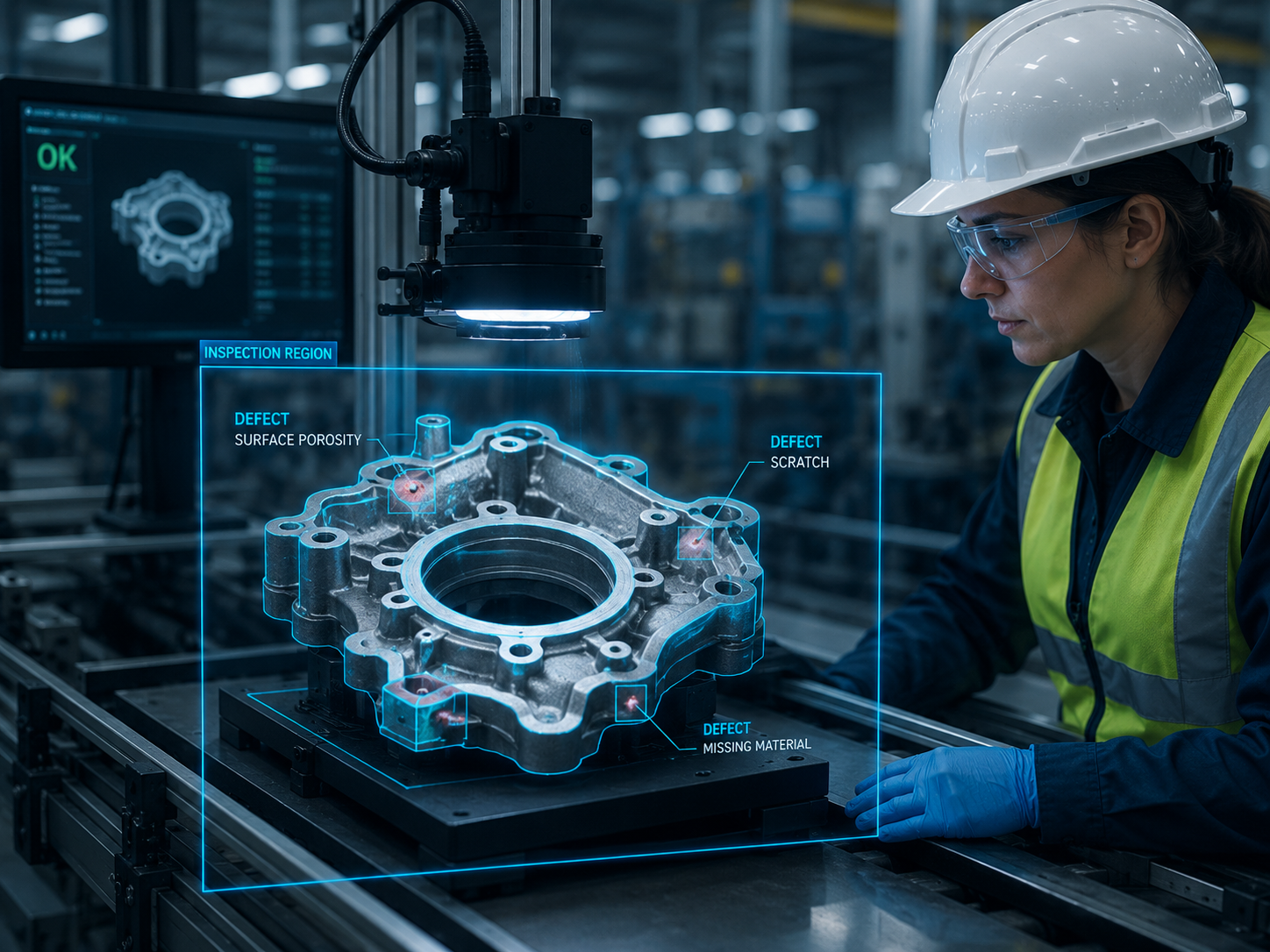
Visual Quality Inspection
Detect defects, surface issues, scratches, and missing material.
Industrial Applications
Focused on real operational problems
Defect Detection
Detect scratches, cracks, missing parts, incorrect placement, visible damage, assembly issues, or surface anomalies.
PPE Detection
Detect helmets, vests, gloves, masks, or other required safety equipment in industrial environments.
Restricted Area Detection
Identify people entering restricted zones, unsafe areas, machinery zones, loading areas, or high-risk spaces.
Warehouse Monitoring
Monitor pallets, loading bays, storage areas, movement, presence, and basic operational activity from camera feeds.
Vehicle & Equipment Detection
Detect forklifts, trucks, machinery, tools, equipment, and operational assets across industrial sites.
Visual Quality Inspection
Automate repetitive inspection workflows and support quality teams with consistent visual checks.
Custom Object Detection
Train detection systems for objects specific to your product, process, facility, or workflow.
Process Monitoring
Track whether specific visual steps, states, or operational events are happening as expected.
Camera-Based Alerts
Transform visual events into alerts, reports, dashboards, or operational signals for your team.
Good Fit
When is Computer Vision worth exploring?
A Computer Vision prototype is usually worth exploring when the task is visual, repetitive, operationally important, and currently handled manually or inconsistently.
Not Sure?
Send us the use case and we’ll assess feasibility
You do not need a perfect dataset to start. A short video, sample images, or a description of the visual task is enough for an initial discussion.