Solutions
Custom Computer Vision systems for industrial operations
We design and prototype AI-powered visual automation systems for manufacturing, logistics, safety, and quality inspection workflows.
Safety & Operations
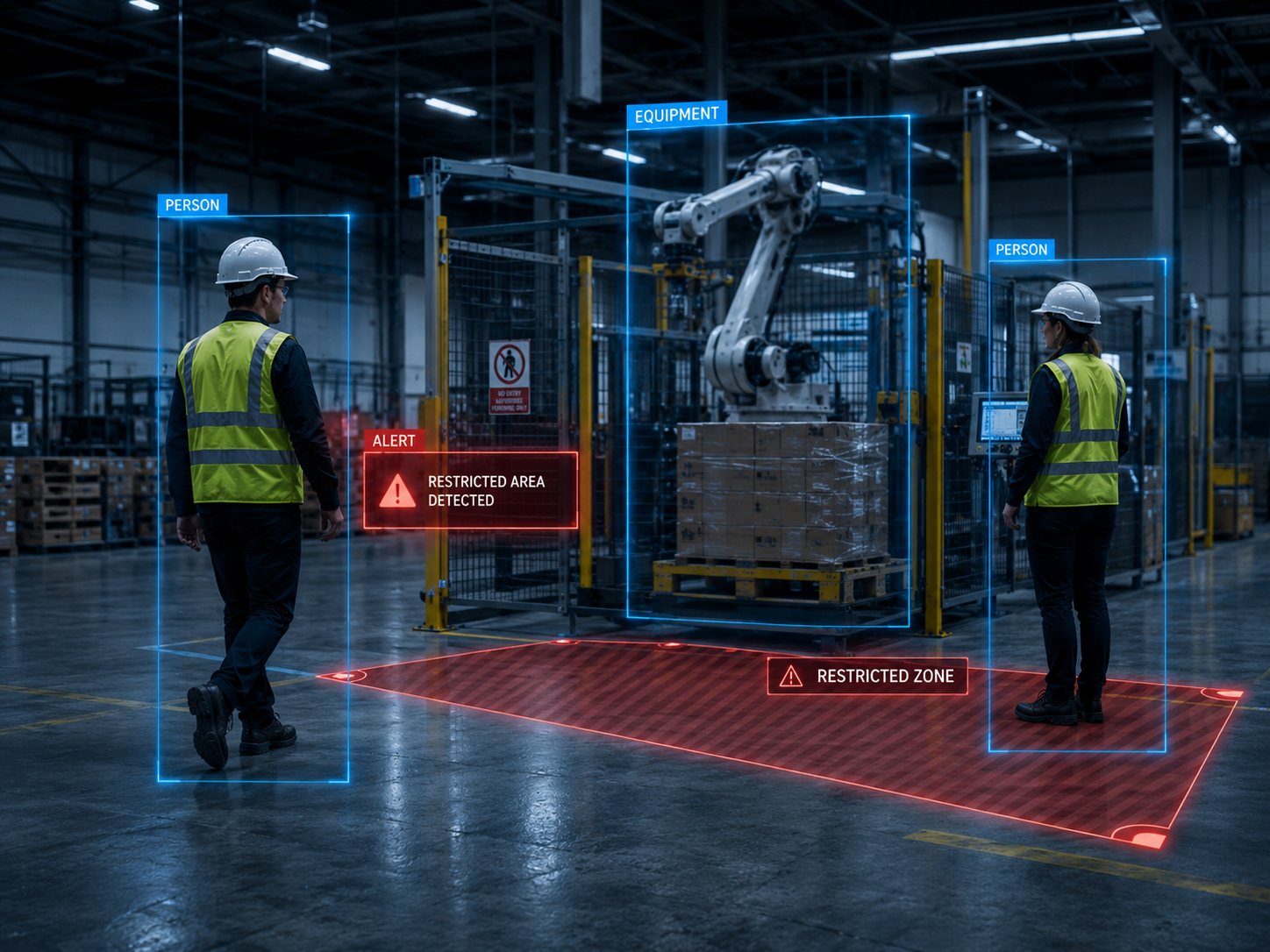
Detect operational risks before they become incidents
Computer Vision can transform existing cameras into a monitoring layer for restricted areas, equipment zones, PPE compliance, pallet movement, and safety-critical workflows.
Equipment monitoring
Safety alerts
Operational intelligence
Core Capabilities
From video and images to operational signals
Industrial Vision Studio helps teams transform cameras, image datasets, and visual inspection workflows into practical Computer Vision systems.
Object Detection
Detect people, vehicles, equipment, pallets, tools, products, parts, and custom objects from images or video streams.
Visual Inspection
Automate repetitive visual checks for defects, missing components, incorrect assembly, surface issues, and quality deviations.
Video Analytics
Analyze camera footage to identify events, movement, presence, safety risks, and operational patterns.
YOLO-Based Systems
Prototype and train YOLO-based models adapted to your objects, camera angles, lighting, and operating conditions.
Safety Monitoring
Detect PPE usage, restricted area access, unsafe proximity, or people entering dangerous operational zones.
Deployment Roadmaps
Define the path from prototype to pilot, including data needs, integration points, hardware constraints, and business value.
How We Work
Built around your operational reality
Computer Vision projects work best when they start with a clear operational problem, real visual data, and a focused prototype.
Start Small
Validate the use case before scaling the system
The best first step is usually a focused prototype using real or representative visual data.